Large selection Unique brands Nice prices


« Back to Tips & Guides
Guide to Riding Helmets
When choosing a riding helmet, there are several important factors to keep in mind. On this page we go over how the helmet should fit, helmet sizes, safety requirements and markings as well as helmet accessories.
Find the best helmets here
Choosing the right riding helmet
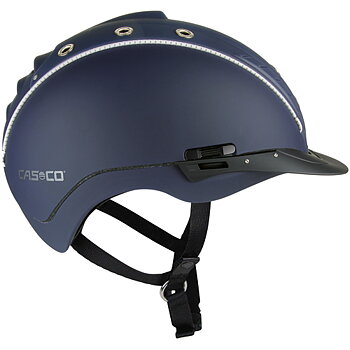
There are many riding helmets on the market that can make your riding safer. When buying a riding helmet it is important that the fit is good and that it meets the safety requirements. Furthermore, if you are competing in any discipline, the riding helmet needs to be approved for competitions. It may be more or less important how the helmet itself looks. You may want a riding helmet that suits the other riding equipment, which matches the horse's saddle or that stands out in the crowd? Fortunately, there is something for everyone; from classic, stylish velvet helmets or suede to colorful plastic helmets or riding helmets with rhinestones and glitter. Common colors are black, brown and navy - but there are riding helmets in all possible color combinations and designs. When choosing a helmet, you need your head's circumference to find the right size. You measure this at about the height of the eyebrows or just above, as in the picture below.
When you have this measurement you can easily choose the size of riding helmet. The sizes are usually stated in centimeters and sometimes they are adjustable. Adjustable helmets can have sizes such as 54-58 cm. These helmets can either be fastened in different ways, resized with a screw or you use a liner (inner lining) in different sizes to adjust the size. Some riding helmets have a screw that you screw on to adjust the helmet size. Riding helmets for children often tend to be adjustable which is good so that you do not have to buy new helmets too often. When you buy a riding helmet for your child, be careful not to choose too big of a helmet thinking that the child can "grow with" it because it may not protect the head properly.
Riding helmet fit
When you have chosen the size of the riding helmet, it is time to check how it fits on your head. The helmet should not be difficult to put on or take off, it should not sit too tight or too loose. If the helmet glides forward or sideways, it is too big. You should feel comfortable in the helmet and it should cover your head well. If the riding helmet has a brim / visor, it should not interfere with your field of view forward or sideways. The chin strap adjusts and tightens so that the helmet sits in place comfortably. When wearing the helmet it should not interfere with either vision or hearing.
Safety labeling of riding helmets
A good riding helmet is a riding helmet that has been tested and marked with the correct safety marking. If you are going to compete, the helmet must in some countries be approved for this. The marking means that the helmet has been tested to the applicable standard and can meet certain safety requirements. Some things that can be tested are shock absorbing ability, lateral stability, resistance and that you can see and hear well with the helmet on. The European Commission is currently reviewing the safety requirements for labeling and hence the transitional rules for riding helmets manufactured from 2014-11-04. These helmets may have different markings depending on the test methods used, but common markings are: VG1 01.140, EN 1384 + VG1, CE ++
If the riding helmet only has EN1384:2012 or EN1384:1996 markings, double check that they are approved for competition as they are probably not tested according to the new requirements. Also check this if you have a helmet made before 04/11/2014. The basic rule for riding helmets approved for competition according to the Swedish Riding Sports Association is the CE mark. VG1 and EN 1384 are additional markings.
When should you replace your helmet?
Generally, it is usually said that riding helmets should be replaced every three to five years. If you have had a fall or hit the helmet, it should also be replaced. Sometimes you cannot see helmet damage from the outside - so it is important to always throw away the helmet when you hit it or drop it. If you borrow a riding helmet from someone, or want to buy a used helmet - be sure to find out the history of the helmet. We do not recommend buying a used riding helmet, as some damage can not be seen with the naked eye. Take good care of your helmet and store it in a way that does not risk it falling to the floor and being damaged. Some riding helmets come with a protective cover or bag when you buy them - but you can also buy a helmet bag for storage.
Accessories for the riding helmet
Some examples of helmet accessories are helmet caps, helmet covers, helmet bags and helmet hoods. With a hood or hat made for riding helmets you can better protect yourself against weather, cold and wind. With a helmet of the right size it can be difficult to fit a hat underneath when you want to avoid freezing during the ride. A helmet cap is then great and it can cover the ears and neck, as well as warm the head. The helmet cap has a thinner material where the helmet itself sits, and therefore it can fit under most riding helmets. A helmet hood also has thinner material over the head, but warms the ears, neck and neck. Some helmet hoods can be pulled up a bit over the nose, which can be nice when riding in winter. A helmet bag or backpack with space for a riding helmet is handy when you want to store and transport the helmet.