Large selection Unique brands Nice prices


« Back to Tips & Guides
Clipping the dog's nails

Nail clipping is not all dogs' favorite activity. But there are tips and tricks you can try out to simplify this activity. On this page we will walk you through how to cut the nails on your dog, why you should do it, different kinds of nail clippers as well as things you can try to make it more comfortable for a dog that is scared or difficult to handle.
Why should the nails be clipped?
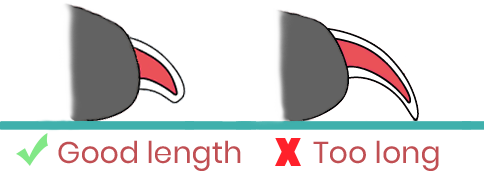
Why do you really cut the dog's nails? Aren't they worn down on their own? Well, partly the claws wear down when you walk on for example asphalt and gravel. If you live an active life with the dog, with a lot of outward activity and movement, then the nails may stay short on their own and not need to be cut. However, many dogs need regular nail care to prevent the nails from breaking or growing into the paw. When the nail has grown too far, it becomes painful for the dog and the risk of claw fractures and breaking increases. This is the main reason why the nails are trimmed. When the nails get too long it can be uncomfortable for the dog to walk, or even painful. The risk of the dog getting caught in something with a nail becomes greater and then the nail can break and get torn off. If you cut the nails regularly, the risk of this is reduced.
Dog nail clipping - what do I need?
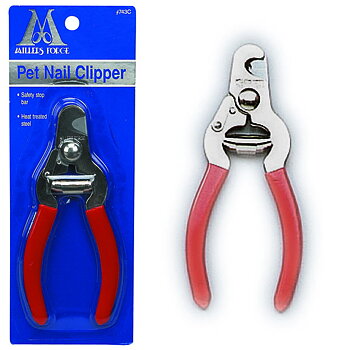
♦ A sharp nail clipper, trimmer or scissors
♦ Good lighting
♦ Knowledge
♦ Patience
♦ A cooperative dog
If one or more of these things are missing, it is quite easy to fix. You can buy a sharp clipper or scissors here, good lighting you may find in the kitchen or bathroom (or near a bright reading lamp), you will gain knowledge after reading this text and patience - yes, this may be more difficult to obtain if you don't already have it. ☺ But for your dog's sake - take a few deep breaths, stay calm and let it take the time it takes. Never be stressed when clipping the nails - it is better to do it when you have a lot of time and no pressure. A co-operative dog may be another item on the list that not everyone has - but further down in the text we suggest how to clip the nails of a dog that is not as co-operative.
Nail trimmer or nail scissors?
What is best - a pair of dog nail scissors or trimmer? Both scissors and trimmers do the same job, so it's more about what you prefer. Some think they get a better overview with scissors, others think that the trimmer make it clearer where to cut. The grip of a nail trimmer differs from how you hold a pair of scissors, even this is a matter of taste. The most important thing is, as said above, that the tool you use is sharp. You may want to change the nail trimming tool after using it for 1-1,5 years to make sure the cutting surfaces are sharp. If the trimmer or scissors are too dull, the nail can be clamped together and it does not cut through as nicely as it should - this can cause discomfort for the dog.
How to cut the dog´s nails
When you have everything you need to cut, take a firm hold of the dog's paw and cut a little bit at a time. If your dog has dark nails, it may be more difficult to see where the quick is located, so always trim a little less than you think you need and work your way up. If you touch the bottom of the nail, you can feel the softer part where the quick is. A light color nail can be seen through a flashlight or the lamp on the mobile phone - the quick is pink. When clipping a nail, it is good to take a firm grip around the pad so that the nail is fixed and not twisted when you cut. Cut smaller pieces at a time, and try to cut at a 45 degree angle. The cut should have an angle so that it matches the angle the nail has towards the floor. Don't forget to cut the front leg dew claws (and the hind legs dew claws if your dog has them). If you cut a dark nail and see a dark dot in the middle of the nail, you should not cut more - it's the channel of the quick.

If a dog has very overgrown nails, it is advisable to cut or file very little at a time as the blood flow to the nail is prolonged when the nail is long. Therefore, the risk of bleeding when you cut may be greater. But if you regularly trim the overgrown nails at short intervals, the quick length will decrease again over time. Then the nails can be cut as usual to a suitable length.
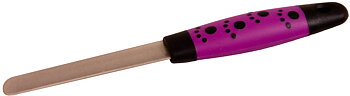
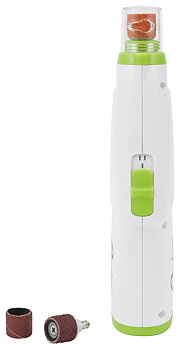
If you are not sure about trimming the nails, you can use a dog nail file / claw file and file the nails instead. This can also be done as a finishing touch when cutting with a trimmer to file away sharp edges.
Be sure to check out and feel the pads when you still have the dog's paw in your hand. Small cuts or other injuries can then be detected and sticks and stones can be removed. If your dog has dry or cracked pads, you can use a paw butter or paw wax to provide moisture and protection for the pads.
If it starts to bleed
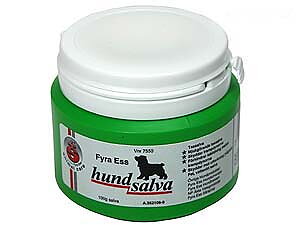
If it starts bleeding when you cut a nail, you have accidentally cut into the nail's blood supply - the quick. The quick (sometimes "kwik") contains blood vessels and nerves. Important here is not to react with a big dramatic scene and worry the dog - instead pretend like nothing happened. The dog may whine or yelp - calm the dog and continue to cut a few more nails. To stop minor bleeding you can use blood stopping stryptic powder or spray. The powder is applied directly to the bleeding area and you keep an even pressure on it until the bleeding has stopped. If you accidentally cut into the quick a lot, the bleeding may not stop - call your veterinarian to be on the safe side. Cutting into the quick is usually not so dangerous, it heals quickly when not to major of an injury so don't worry.
Getting the puppy used to nail trimming
If you are going to get your puppy used to nail clipping, there are some clever tricks you can try out to make nail clipping a breeze. Be sure to cut the nails after a walk or playtime while the puppy is tired and calm. If the puppy is not used to being carried or sitting on your lap, this may be step one. Start getting the puppy used to sitting or lying on your lap calmly and quietly while it gets rubs and praise. When the puppy is still in your lap, you can gently start touching the paws and nails while praising the puppy. If it goes well you can gently hold the paw for a while, then release and praise. Make sure the puppy learns that it's okay for you to hold the paw. You don't have to have your dog in your lap to cut the nails, but with a small puppy it can sometimes be easier.
You can then take out the nail clipper and hold it close to the paws, without cutting, while you praise and maybe give a treat. Make it a fun game. Do this a few times until the puppy associates the nail clipper with something fun that leads to praise, pats and maybe treats. Then you can start cutting carefully - start by just cutting one nail and wait for a day until you cut one or more nails. When you cut the first few times, take very little, just the very tip, so you don't risk cutting too short and maybe scare the puppy if it starts to bleed. Be careful, calm and steady on the hand and remember that the puppy can jerk the paw back so you do not accidentally cut into the quick. Give lots of praise when the puppy stays still and when you are done.
If you happen to cut into the quick, it is important that you do not react too strongly to this - pretend nothing has happened and stop the bleeding with stryptic powder if needed. Even if the puppy yelps or pulls away the paw, it is important that you stay calm and don't get scared, worried or upset. If you accidentally cut into the quick and the blood keeps flowing, you may need to call a veterinarian.
Scared or difficult-to-handle dogs
Some dogs yelp or whine as soon as they see the nail clippers are taken out. Or they run and hide. As a dog owner, you can feel uneasy if you have a dog who becomes scared or worried when it is time for nail trimming. Of course, it feels extra scary to cut when the dog screams or yelps as if it is in pain, sometimes even before you cut into the nail. In many cases it is just that; the dog makes noises even though it does not hurt. As long as you hold the dog properly, do not twist the pad or nail, and cut in the right place, it does not hurt.
A dog that is difficult to handle in conjunction with clipping you can try to get used to clipping in the same way as you would a puppy. Try the tips in the text above. Make the clipping into something fun and cozy where the dog gets praise and reward. Bring out the dog's absolute favorite treat - the reward must be motivating enough for the dog to want to "work" for. Start by just holding the your paw and praising, then start approaching with the clipper. Train your dog to sit still while holding the paw and praise and reward when it stays still. Don't rush the process - let it take a few days before you actually cut a nail. And again - even if it feels difficult, it is important that you stay calm and sure. Otherwise, it is difficult for the dog to feel calm and confident. You can try playing with the dog until it is tired before cutting the nails, or you can cut when the dog is resting (do not surprise the dog, but take advantage of the fact that it is lying down and is calm and gently cut a nail and give reward).
If your dog absolutely does not want to be around when the nail clippers are out - try a claw file. Maybe the dog thinks that it feels more okay to have the nails filed instead. If this does not work, or if you are not willing or able to cut the nails yourself, it is good to go to a veterinarian or pet store with a nail clipping service. A muzzle or neck collar can be used for the safety of the person clipping.